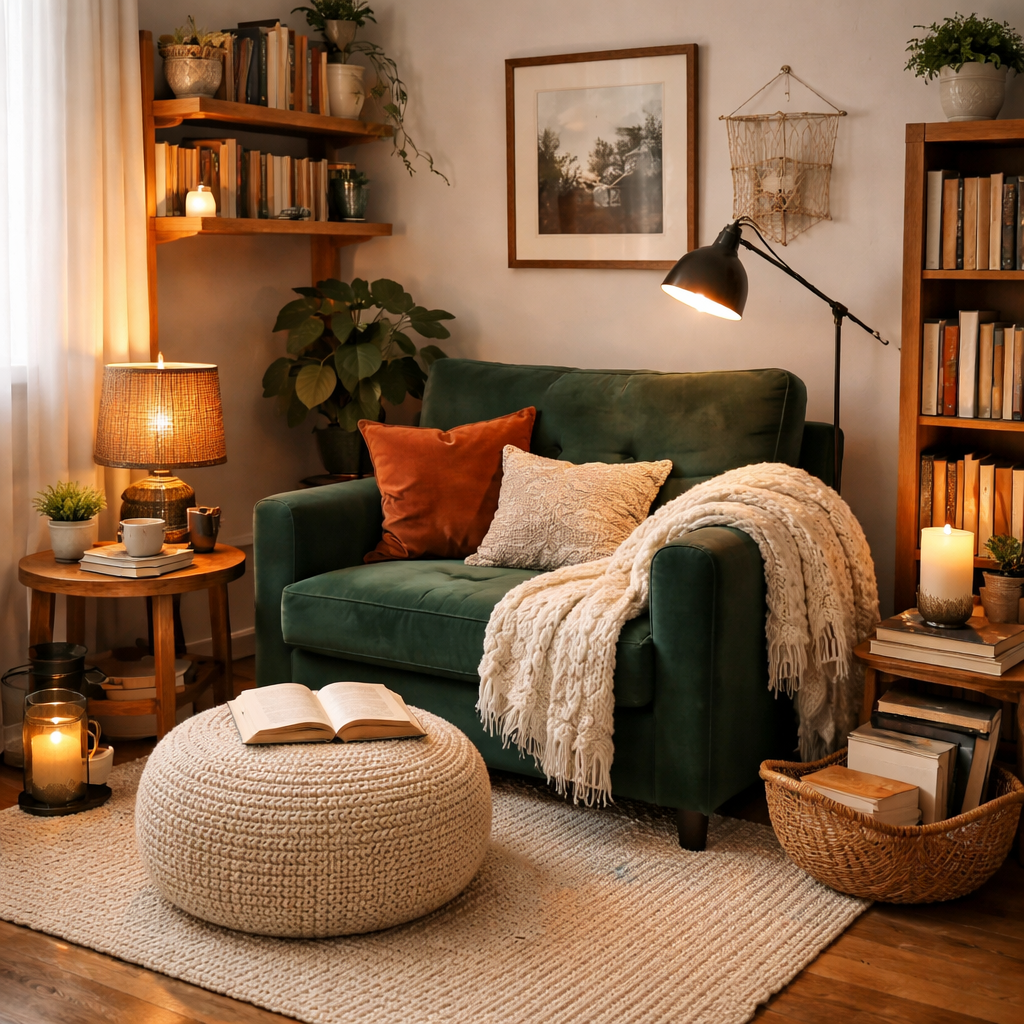
In a world saturated with screens and constant distractions, the reading nook is making a strong comeback in modern interiors. It is no longer just a decorative luxury, but a true space for breathing and slowing down. Creating a comfortable reading nook with an armchair means thinking about posture, lighting, atmosphere, and silence. This detailed guide walks you through every step to design a functional, aesthetic, and lasting space based on simple yet effective principles.
Why create a reading nook at home
A reading nook meets several essential needs:
- disconnecting: reducing screen time
- refocusing: creating a personal bubble within a shared space
- improving concentration: a dedicated area enhances immersion
- enhancing your interior: even a small corner can become useful
Beyond practicality, this space also impacts well-being. A comfortable seat, a calming atmosphere, and a thoughtful layout allow you to read longer without fatigue.
Choosing the ideal armchair for comfortable reading
The armchair is the centerpiece. Its selection should never be random. It shapes the entire reading nook and directly affects your comfort, especially when taking inspiration from collections offered by Ligne Roset.
Essential criteria
A good reading armchair should meet several requirements:
- proper back support: choose a slightly reclined backrest
- comfortable seating: neither too firm nor too soft
- well-designed armrests: helpful for supporting your arms while reading
- correct height: your feet should rest flat on the floor
Types of armchairs to consider
Some models are particularly suitable:
- club armchair: enveloping, ideal for long sessions
- Scandinavian armchair: lightweight and ergonomic
- rocking chair: perfect for a relaxing atmosphere
- armchair with footrest: optimal comfort for the legs
Materials to consider
The upholstery affects both comfort and maintenance:
- fabric: warm, breathable, easy to integrate
- leather: elegant, durable, but cooler to the touch
- velvet: soft and cozy, perfect for a cocooning feel
Getting the lighting right to protect your eyes
Reading in poor lighting conditions quickly leads to fatigue. Lighting is therefore essential.
Natural vs artificial light
- place your armchair near a window if possible
- avoid direct reflections on pages
- complement with suitable lighting
Ideal lighting options
- floor lamp: illuminates without cluttering
- adjustable lamp: allows you to direct the light
- warm light lamp: more comfortable for the eyes
Practical tips
- choose lighting between 3000K and 4000K
- position the light source opposite your dominant hand
- avoid lighting that is too strong or too dim
Creating a relaxing atmosphere
A reading nook is not just about an armchair. The overall ambiance matters just as much.
Key elements
- a soft rug: adds warmth and comfort
- cushions: enhance ergonomics
- a throw blanket: ideal for long reading sessions
- a side table: for books, drinks, or glasses
Colors to favor
Colors influence your mood:
- neutral tones: beige, off-white, light gray
- soothing colors: soft green, blue
- avoid overly bright colors that overstimulate
The importance of silence
- choose a quiet area of the home
- stay away from high-traffic zones
- add thick curtains to reduce noise if needed
Optimizing space, even in small homes
You don’t need a full room to create a reading nook.
Tips for small spaces
- use an unused corner
- install wall shelves
- choose a compact armchair
- integrate the nook into a bedroom or living room
Space-saving solutions
- multifunctional furniture
- wall-mounted lighting to free up floor space
- nearby or built-in storage
Adding a personal touch for a unique space
A successful reading nook reflects your personality.
Personalization ideas
- display your favorite books
- add a plant for a natural touch
- include artwork or photos
- play with textures and materials
Creating a routine around your nook
- read at regular times
- associate reading with calm moments (morning or evening)
- limit digital distractions
The comeback of reading nooks in interior design
In recent years, interior design professionals have observed a renewed interest in dedicated reading spaces. This trend is driven by several factors: the rise of remote work, the need to slow down, and the growing desire for home comfort.
Furniture brands are adapting their collections with more ergonomic armchairs, specialized lighting, and compact solutions. At the same time, social media highlights cozy interiors, where the reading nook becomes a central feature, just like the kitchen or living room.
Mistakes to avoid when setting up your reading nook
Even with good intentions, some mistakes can reduce comfort:
- choosing an armchair based only on aesthetics
- neglecting lighting
- overcrowding the space
- ignoring reading posture
- placing the nook in a noisy area
Fixing these issues can instantly improve your experience.
FAQ: frequently asked questions
An armchair with a reclined backrest, armrests, and proper lumbar support is ideal. Models with a footrest provide extra comfort.
Soft, adjustable lighting between 3000K and 4000K helps prevent eye strain.
Yes. A simple corner with a compact armchair, a lamp, and a shelf is enough to create a functional space.
Add a throw blanket, cushions, a rug, and use soft colors to instantly enhance the atmosphere.
Conclusion
Creating a comfortable reading nook with an armchair does not require major renovations or a large budget. It’s about making the right choices: a suitable armchair, well-designed lighting, and a calming atmosphere. Every detail matters. By taking the time to design this space, you are creating more than just a reading corner you are building a daily refuge, a place to slow down, reflect, and escape.
In a modern home often focused on functionality, this type of setup reminds us of a simple truth: comfort is not a luxury, it is a necessity.