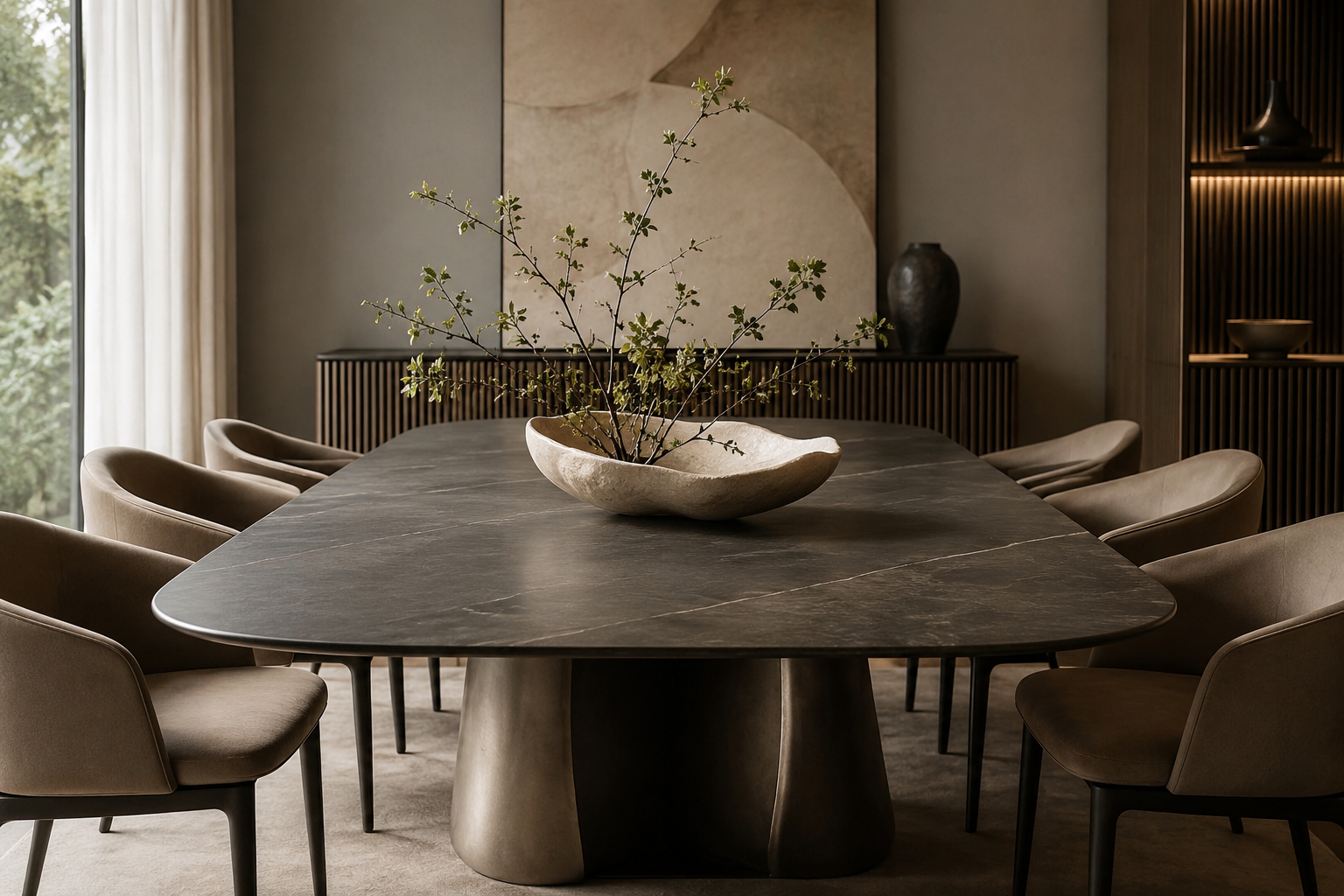
Choosing the perfect dining room centerpiece is one of the simplest ways to transform a dining space. The right centerpiece adds character, creates visual balance, and enhances the overall atmosphere without overwhelming the room.
Whether your dining room is modern, contemporary, minimalist, or classic, selecting the right decorative focal point requires careful consideration of scale, style, materials, and functionality.
Key Takeaways
- A centerpiece should complement the size and shape of your dining table.
- Balance aesthetics and practicality to avoid clutter.
- Materials, colors, and textures should harmonize with your interior design.
- Seasonal updates can keep your dining room fresh throughout the year.
- Quality pieces from brands like Ligne Roset help create a timeless and sophisticated look.
Why the Dining Room Centerpiece Matters
A dining table is often the visual anchor of a dining room. Without a centerpiece, the space can sometimes feel unfinished or lacking personality.
A well-chosen centerpiece serves several purposes:
- Creates a focal point
- Adds warmth and visual interest
- Reflects your personal style
- Enhances the dining experience
- Connects furniture and décor elements together
More importantly, when paired with a designer dining table from Ligne Roset, a thoughtfully selected centerpiece helps establish the mood of the room, whether you want a formal, elegant setting or a relaxed and inviting atmosphere.
Start with the Size of Your Dining Table
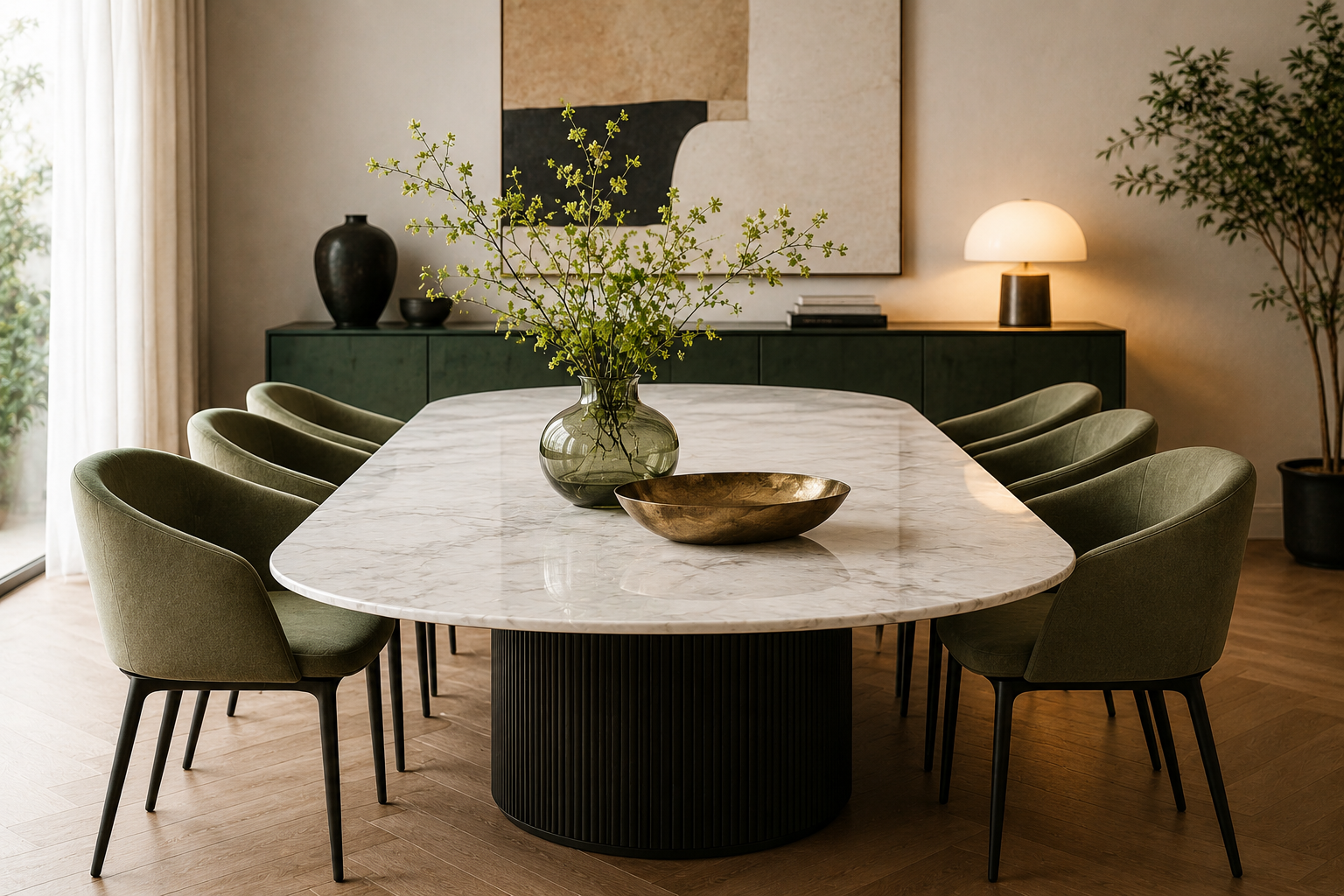
One of the most common decorating mistakes is choosing a centerpiece that is either too large or too small.
The centerpiece should feel proportional to the table while leaving enough room for place settings and everyday use.
| Table Size | Recommended Centerpiece Size |
| Small round table | Single vase or decorative bowl |
| Medium rectangular table | Low arrangement or grouped objects |
| Large dining table | Multi-piece arrangement or elongated display |
As a general rule, the centerpiece should occupy the visual center of the table without obstructing conversation across it.
Match the Centerpiece to Your Interior Style
The best dining room centerpiece feels like a natural extension of the room.
Modern Dining Rooms
Modern interiors often benefit from clean lines and sculptural objects.
Examples include:
- Geometric vases
- Contemporary ceramic pieces
- Minimalist candle holders
- Artistic center bowls
Scandinavian Interiors
Scandinavian spaces prioritize simplicity and natural materials.
Popular options include:
- Wooden trays
- Dried flowers
- Neutral ceramic vessels
- Natural stone accessories
Classic Dining Rooms
Traditional spaces generally pair well with:
- Fresh floral arrangements
- Crystal centerpieces
- Elegant candlesticks
- Decorative silver accents
Consistency between furniture, lighting, and accessories creates a more cohesive design.
Choose the Right Height
Height is often overlooked but has a major impact on functionality.
Very tall centerpieces can block sightlines and make conversation uncomfortable during meals.
For daily dining use, interior designers typically recommend:
- Low arrangements under eye level
- Medium-height decorative objects
- Open and airy compositions
If you prefer dramatic floral displays, consider using them only for special occasions or entertaining guests.
Materials and Textures Make the Difference
A dining room becomes more visually appealing when multiple textures interact together.
Combining materials creates depth and sophistication.
Popular combinations include:
- Glass and wood
- Ceramic and linen
- Marble and metal
- Natural fibers and stone
Rather than matching everything perfectly, aim for complementary contrasts that add visual richness.
Seasonal Centerpieces: An Easy Way to Refresh Your Space
One advantage of centerpieces is their flexibility.
Updating your centerpiece seasonally allows you to refresh your dining room without purchasing new furniture.
Spring
- Fresh flowers
- Soft pastel colors
- Lightweight ceramics
Summer
- Citrus displays
- Natural woven baskets
- Bright botanical elements
Autumn
Dried foliage
Warm earthy tones
Wooden accents
Winter
- Candles
- Evergreen arrangements
- Metallic decorative touches
These subtle changes can significantly alter the ambiance of a room throughout the year.
Common Mistakes to Avoid
Many dining room styling issues stem from a few recurring mistakes.
Choosing a Centerpiece That’s Too Large
Oversized arrangements can make the table feel crowded and impractical.
Ignoring Table Shape
A centerpiece should reinforce the geometry of the table.
- Round tables work well with central arrangements.
- Rectangular tables often benefit from elongated compositions.
Prioritizing Decoration Over Function
The dining table is still a functional space.
Avoid designs that make serving meals or daily use difficult.
Using Too Many Decorative Objects
A cluttered centerpiece loses visual impact.
Often, one exceptional object creates a stronger statement than several smaller items.
Why Ligne Roset Is a Reference for Dining Room Design
For decades, Ligne Roset has been recognized internationally for its contemporary furniture and refined design philosophy.
The brand’s approach combines:
- Innovative design
- Premium materials
- Timeless aesthetics
- Functional elegance
When selecting a dining room centerpiece, inspiration from Ligne Roset collections can help create interiors that feel sophisticated without appearing excessive.
Many homeowners and interior designers appreciate the brand’s ability to blend artistic expression with everyday practicality, making it easier to curate a dining space that remains stylish for years.
How to Build a Designer-Looking Centerpiece
Professional interior stylists often follow a simple formula.
The Rule of Three
Group three complementary elements together:
- A sculptural object
- A natural element (flowers or greenery)
- A decorative tray or bowl
This approach creates balance while maintaining visual interest.
Layer Different Heights
Combining varying heights creates depth without overwhelming the table.
Keep Negative Space
Empty space is just as important as decoration.
Allowing breathing room helps the centerpiece stand out and prevents visual clutter.
Final Thoughts
The perfect dining room centerpiece is not necessarily the most expensive or elaborate one. It is the piece that creates harmony between the table, the room, and the people who use it every day.
By considering proportion, style, materials, and functionality, you can create a centerpiece that enhances your dining room while reflecting your personal taste.
Inspired by the design principles championed by Ligne Roset, a carefully chosen centerpiece becomes more than a decorative object—it becomes a defining element of the entire dining experience.
Frequently Asked Questions
What is the best centerpiece for a dining room table?
The best centerpiece depends on the size of the table and the style of the room. A balanced arrangement that complements the surrounding décor while leaving enough functional space is generally the most effective choice.
How large should a dining room centerpiece be?
A centerpiece should be proportional to the table. It should occupy the visual center without dominating the entire surface or interfering with dining activities and conversation.
Should a dining room centerpiece match the furniture?
It does not need to match exactly, but it should complement the colors, materials, and design language of the furniture to create a cohesive overall appearance.
Are flowers the best option for a centerpiece?
Flowers remain a popular choice because they bring color and freshness to a room. However, sculptural objects, bowls, candles, and artistic accessories can be equally effective depending on the interior style.
How often should I change my dining room centerpiece?
Many homeowners update their centerpiece seasonally to reflect changes in colors, textures, and decorative trends. Even small adjustments can help keep the dining room feeling fresh and inviting.
What colors work best for a dining room centerpiece?
Neutral tones offer timeless elegance, while accent colors can add personality. The ideal palette should complement the room’s existing décor rather than compete with it.